

Historical and Geographical Context
The parish of Puerto Misahuallí, known as the first tourist port in the Ecuadorian Amazon, is located just 24 km (30 minutes) from the city of Tena, on the left bank of the majestic Napo River. Its modern history was spurred by the 1941 conflict and consolidated on April 30, 1969, the date on which it was officially elevated to a rural parish. Geographically, it is a strategic territory of 513.8 km² situated at 517 meters above sea level, which gives it exceptional biodiversity per square meter, as it is part of the high Amazon rainforest. The origin of its name has two popular interpretations: one alluding to "mass with candles" (hualli), due to the nighttime ceremonies held on the riverbank before the arrival of electricity, and another translating hualli as "logs," because of the large pieces of wood that the river carried during its floods.
Cosmovision and Legends
The spiritual identity of Misahuallí is deeply intertwined with the rainforest and its guardian spirits. One of the most cherished legends is that of "The Boa and the Tiger" in the community of Latas. It tells of an immense 14-meter boa constrictor that rescued a young girl from drowning in the Napo River and, from then on, became a member of the family, watching over the children until it gave its life defending them from a hungry tiger. Likewise, stories persist about the Aya Uma, the personification of Pachamama's energy that dances in the communities, and the Yakumama (mother water), a colossal black boa that guards the abundance of fish in the depths of the rivers and lakes. These stories are not merely tales; they constitute the ethical framework of respect and harmony that the inhabitants maintain with their natural environment.
Worldview and Legends
Cultural Identity and Flavors
With a population where 80% self-identify as Kichwa (descendants of the Quijos and Yumbos), Misahuallí is a center of living culture. Its traditions are manifested in indigenous music, dance, and handicrafts, notably the weaving of pita fibers and clay pottery decorated with natural glazes and ancestral symbols. The gastronomy is a multisensory experience centered on the products of the chakra (traditional agricultural fields): maito de tilapia (tilapia wrapped in bijao leaves and grilled over embers), nutritious chontacuro skewers (palm larvae with medicinal properties), and uchumanga (spicy broth). Local hospitality is always offered with a múcua (a traditional drink) of chicha (fermented cassava beverage) made from yucca or chonta palm, and the awakening of the senses with the traditional guayusa tea at dawn.
Tourism Potential and its Star Attraction
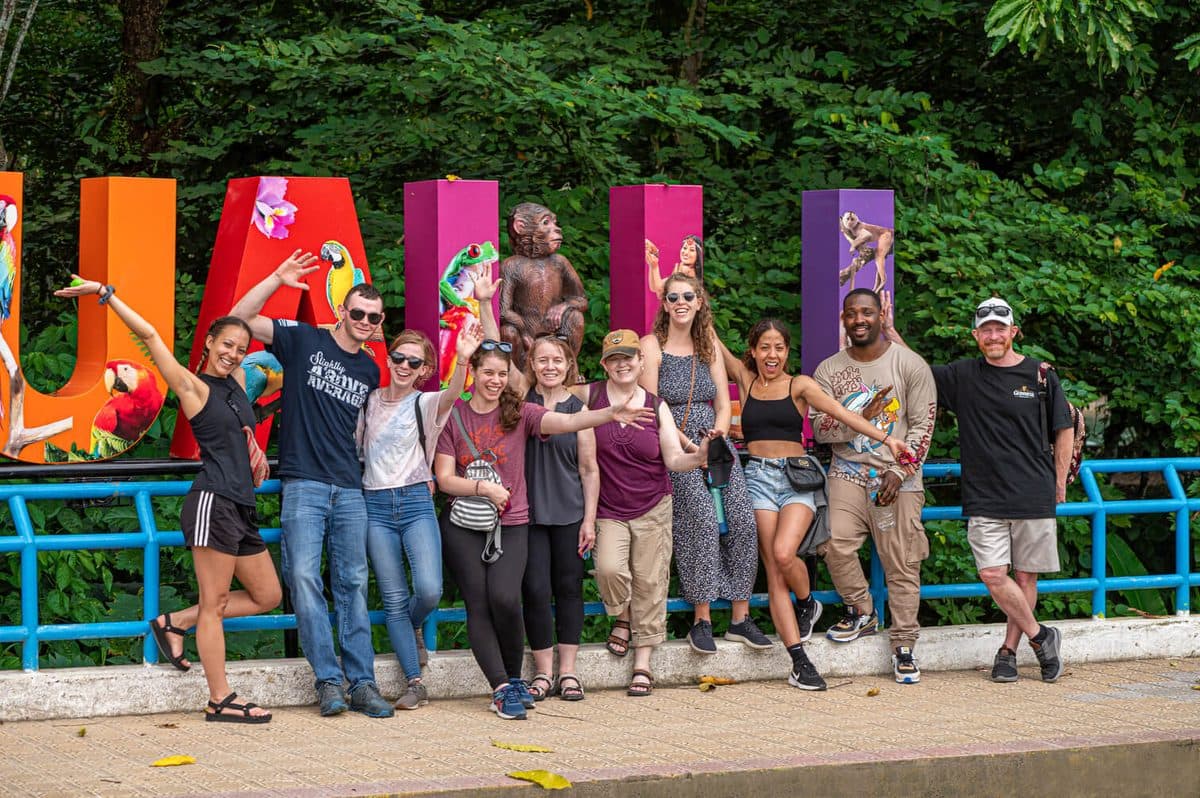
Puerto Misahuallí offers a wide range of activities, from relaxation to extreme adventure, such as motorized canoe trips on the Napo River, visits to community tourism centers like Shiripuno and Sinchi Warmi, and hikes along trails leading to the impressive Latas Waterfalls or the mystical Goblin Cave. However, its star attraction is its famous white-sand beaches and the Capuchin Monkeys. These curious inhabitants are the true celebrities of the central plaza and the beach; they are wild animals that coexist daily with tourists, offering a unique natural spectacle in the country that has made Misahuallí an iconic destination worldwide. Furthermore, the port is the setting for the famous Beach Carnival, which attracts thousands of visitors each year to enjoy music and culture on the riverbanks.